Letter F Worksheet - Free Alphabet Tracing, Writing & Coloring


Things that start with F
This cheerful worksheet from Holiday Educationist gives young learners everything they need to get comfortable with the letter Ff — from careful tracing to free-hand practice, letter recognition, and a splash of colour. It works beautifully as a sit-down activity at home or as part of a structured phonics lesson in the classroom.
What's on the Page
The worksheet is packed with purposeful activities, all focused on a single letter so children aren't overwhelmed. At the top left, large dotted outlines of capital F and lowercase f invite children to trace with a pencil or crayon, feeling the shape before writing it independently. Beneath that is a circle-the-letters grid where children scan a mix of letters — m, t, a, e, T, A, b, f, A, h, a, q, r — and circle every F or f they spot. This builds visual discrimination, a key pre-reading skill.
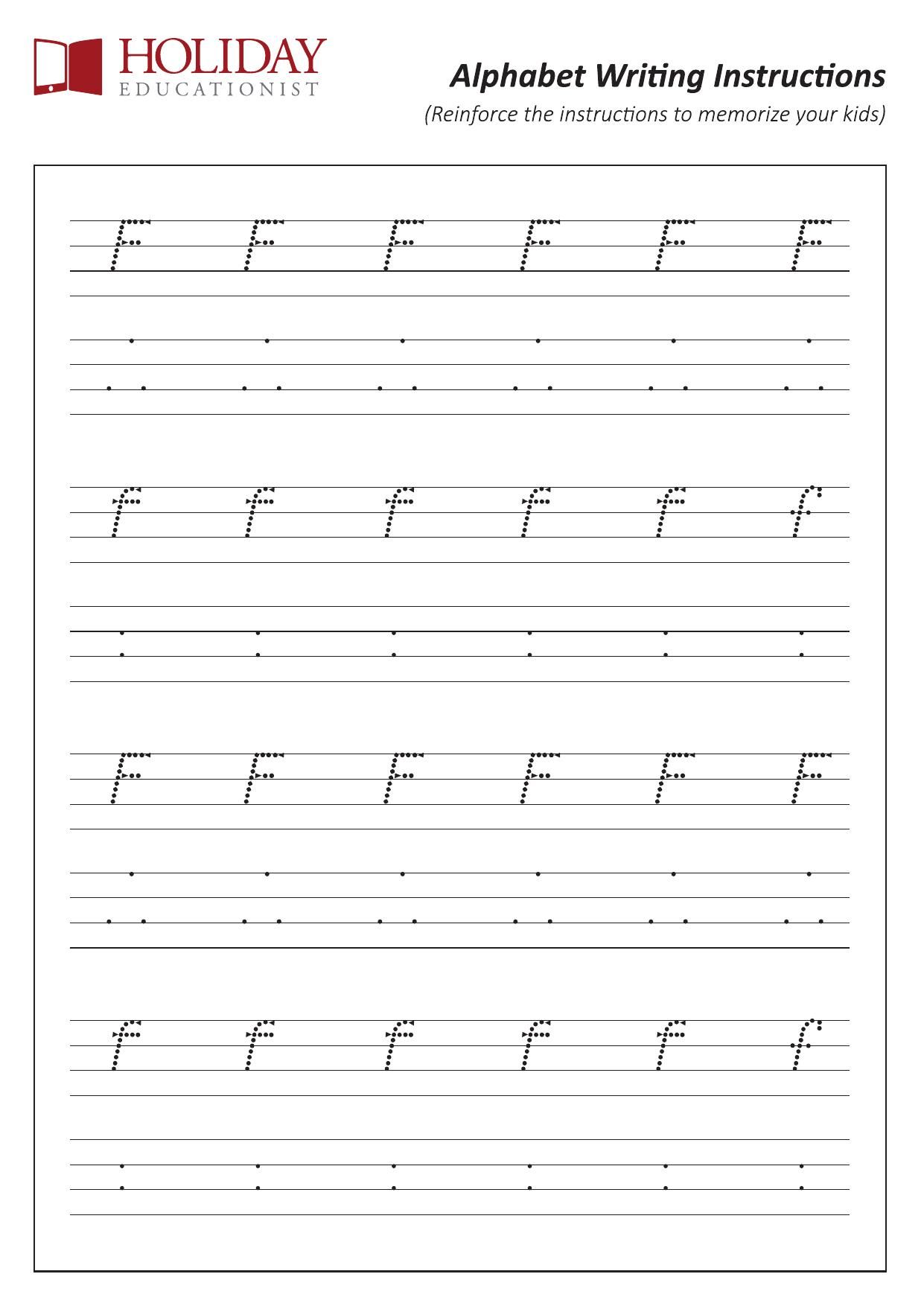
On the right-hand side, six colour-the-pictures illustrations give the letter a real-world context: a flower, a finger, a flamingo, a fork, a flag, and a fan. Saying each word aloud as children colour reinforces the /f/ sound naturally and joyfully. The lower half of the page provides two rows of four-line writing practice — one for capital F and one for lowercase f — with dotted letter guides fading out to leave blank lines for independent attempts.
How to Use It Effectively
Start by saying the /f/ sound together and pointing to each picture, asking your child to repeat the word. Then model tracing the letter in the air before touching pencil to paper — this "sky writing" step helps the shape stick in muscle memory. For the circle activity, encourage children to say each letter name aloud before deciding whether to circle it; this slows them down and sharpens focus. Once colouring begins, keep the conversation going: "What colour is a flamingo? Have you ever seen a real one?"
The Tricky Bit: Forming the Letter F
Capital F is relatively straightforward, but children often forget the middle horizontal stroke, drawing it either too high (making it look like an E without the bottom bar) or missing it entirely. Remind them: "tall line down, two arms — one at the top, one in the middle." Lowercase f trips children up with its curved top hook — many write a straight vertical line instead. Practise the hook separately before combining it with the crossbar.
This worksheet suits children aged 3–7 and fits neatly into any early phonics or handwriting programme.